


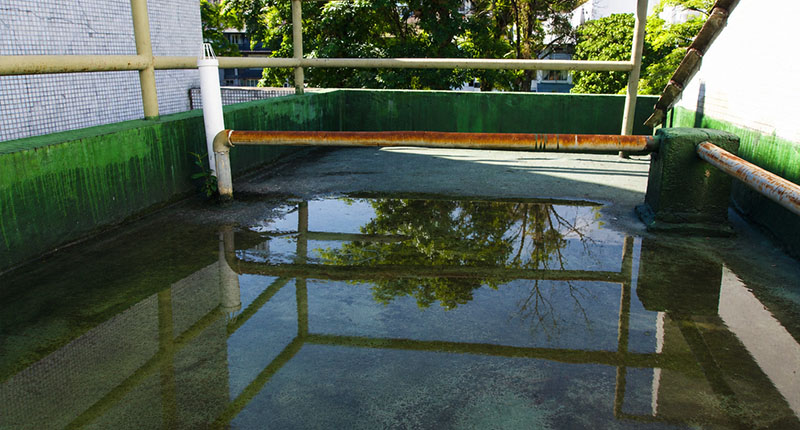
Recurring roof leaks are one of the most frustrating issues for older residential buildings. The problem becomes even more serious when the roof had already been waterproofed before, yet the leaks still return within just a few years. For residents, it leads to repeated inconvenience and damage. For building owners and management committees, they need to act quickly while trying to avoid another failed repair cycle.
That was the situation at a residential building in Kuala Lumpur that is almost 39 years old. Over the years, recurring roof leaks had affected several units in the building. What made the issue more concerning was that the roof had actually undergone waterproofing less than five years earlier. Despite that, the leakage started coming back.
This is not uncommon in older buildings. When waterproofing fails earlier than expected, the problem is often not just the material alone. In many cases, it is the result of poor surface preparation, weak workmanship, blocked drainage, water ponding, or an incompatible waterproofing system being applied over an existing roof condition.
Why roof leaks can return even after waterproofing
Many people assume that once a roof has been waterproofed, it should remain protected for years without issue. In reality, waterproofing performance depends on much more than simply applying a membrane. The substrate condition, surface preparation, drainage, layer build-up, reinforcement, and workmanship all affect how long the system will perform.
When Nippon Paint inspected the rooftop areas of this residential building, several conditions were identified that are commonly seen in ageing properties.
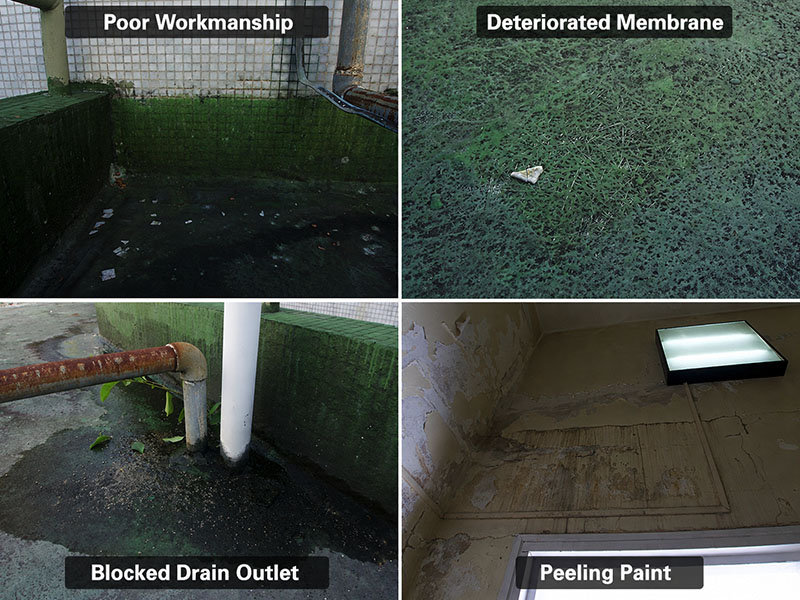
First, the existing waterproofing membrane had already deteriorated in almost all areas. This meant that the roof surface was no longer providing consistent protection against water ingress.
Second, some outlets were partially blocked, causing water ponding to occur on the roof. Standing water is one of the most common reasons waterproofing systems come under continuous stress. Over time, this can weaken even a previously installed system, especially when combined with surface defects or poor detailing.
Third, and most importantly, the surface preparation from the previous repair works had not been properly carried out. This is often one of the biggest hidden reasons waterproofing fails early. When the substrate is not prepared correctly, the new membrane may not bond properly, and the system can begin to fail long before it should.
In many cases like this, the issue is not just the product itself. It is the combination of workmanship, preparation, drainage condition, and system compatibility. When these factors are not properly addressed, waterproofing systems can fail much earlier than expected.
Why this matters even more in older residential buildings
Older residential buildings present a more demanding waterproofing challenge. Roofs that have been exposed for decades are more likely to have weathered surfaces, previous repair layers, drainage problems, and movement-related stress.
That is why re-waterproofing should never be treated as a simple patching exercise. In older buildings, it requires proper diagnosis, a system that is compatible with the existing roof condition, and careful application by trained specialists.
Without that approach, the building risks entering a cycle of repeated repairs, where leaks keep returning and maintenance costs continue rising.
What should be checked before approving re-waterproofing works
For building owners, property managers, and management committees, this case also highlights several important things to check before any re-waterproofing project is approved.
1. Request a proper surface preparation method statement
The roof surface condition determines how well the new waterproofing system will perform. A proper method statement should clearly explain how the surface will be cleaned, treated, and prepared before any waterproofing layers are installed.
2. Confirm system compatibility with the existing roof condition
Not every waterproofing system is suitable for re-waterproofing. In older buildings especially, the proposed solution must be compatible with the actual substrate condition and site exposure.
3. Review the system thickness and full layer sequence
Waterproofing performance depends heavily on correct film build, reinforcement, and layer sequence. A system is not just one coat. It is a structured build-up that must be applied correctly.
4. Ensure supervision during critical application stages
Even a good product can fail if the installation is poorly supervised. Surface preparation, crack treatment, reinforcement placement, detailing, and layer thickness all need proper control on site.
5. Document the roof condition before and after the works
This helps create a clearer record for future maintenance planning and gives all stakeholders better visibility into the roof’s actual condition and what was done during the repair.
These checks are important because they help reduce the risk of another premature failure.
Why the Management Committees selected Nippon Paint
For this project, the building stakeholders were looking for a manufacturer with proven waterproofing systems and a strong track record in similar projects. Confidence in the system provider matters, especially when previous repair attempts have already failed.
Nippon Paint has delivered waterproofing solutions for developments such as Hilton Hotel, Angsana Mall, TM Buildings, and Sky Oasis Residence. With that confidence, the project team selected Nippon Paint’s reinforced waterproofing system for the rooftop refurbishment.
The waterproofing system used for this rooftop refurbishment
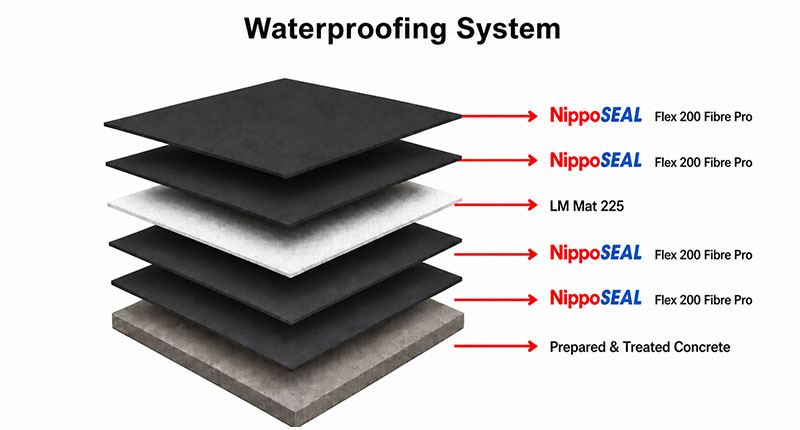
For this project, Nippon Paint implemented a multi-layer waterproofing system using NippoSEAL FLEX 200 Fibre Pro.
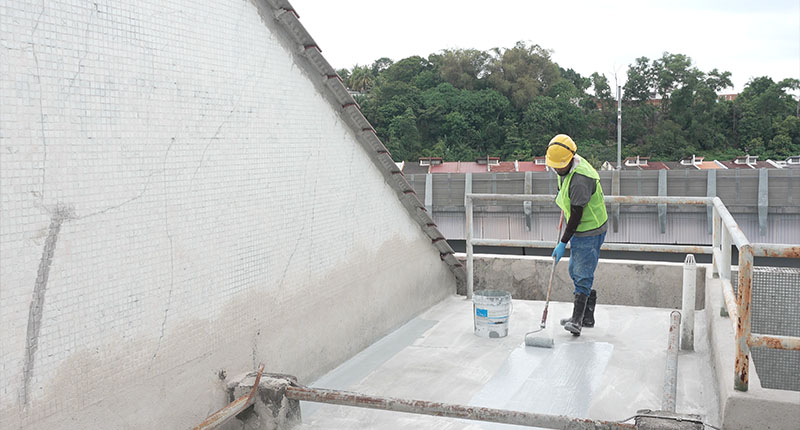
The system began with a primer layer of NippoSEAL FLEX 200 Fibre Pro to ensure strong adhesion between the substrate and the waterproofing membrane. This first step is essential in helping the system bond properly to the roof surface.
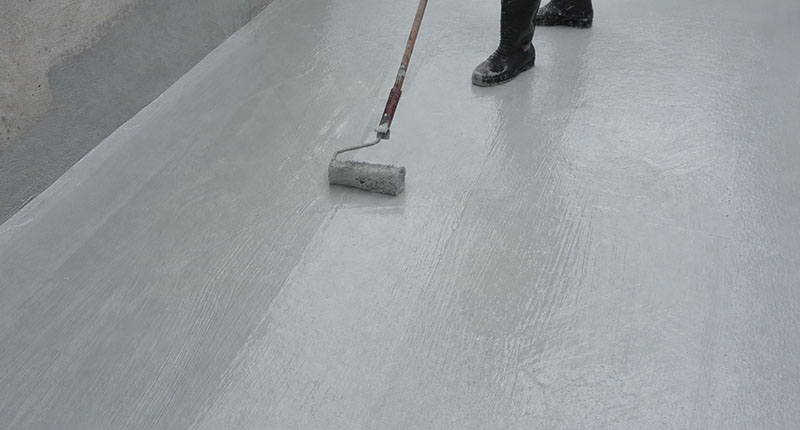
Next, NippoSEAL FLEX 200 Fibre Pro was applied. This membrane contains micro-fibre reinforcement, which helps improve film strength and durability.
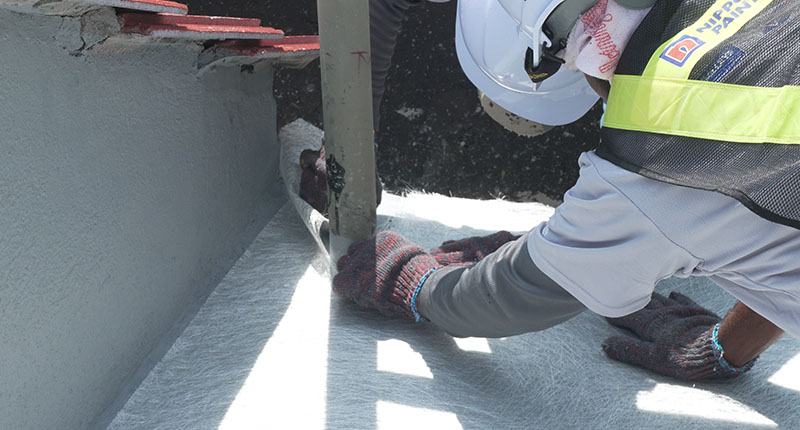
After that, a reinforcement layer using Nippon Paint LM Mat 225 was installed to further strengthen the waterproofing membrane.
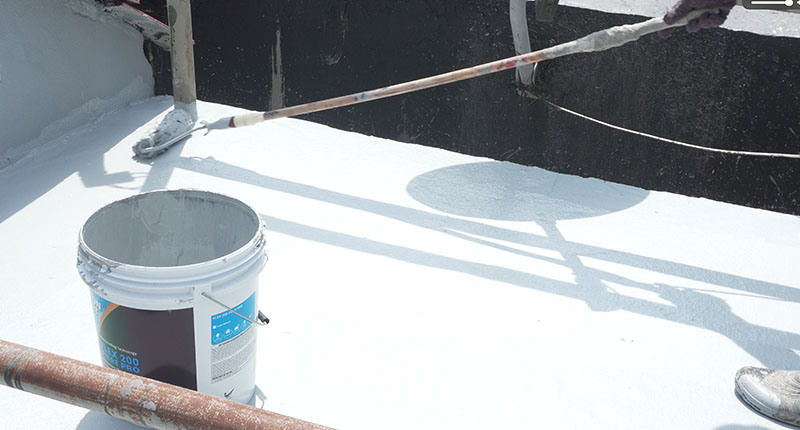
Finally, additional reinforced layers of NippoSEAL FLEX 200 Fibre Pro were applied to achieve the required thickness and protection.
The result is a seamless, breathable waterproofing membrane designed to resist ageing caused by heat, UV exposure, rain, and wind. The integrated micro-fibre reinforcement also helps the membrane accommodate expansion and contraction stresses that commonly occur on exposed roof surfaces.
Why this system is suitable for older rooftops
This reinforced system is especially valuable for older residential buildings because it is designed to address several common roof challenges at once. It provides:
Strong adhesion
The primer layer helps improve bonding to the substrate, which is critical in re-waterproofing works
Improved film strength
The micro-fibre reinforced membrane helps make the waterproofing system more durable.
Additional membrane reinforcement
The LM Mat 225 layer adds further strength to the overall build-up.
A seamless protective layer
A seamless membrane reduces weak points across the roof surface.
Resistance to weathering and ageing
The system is designed to withstand heat, UV, rain, and wind exposure over time.
Accommodation of roof movement
The reinforced membrane helps handle the expansion and contraction stresses that are common on roof surfaces.
Why workmanship is just as important as product choice
For older buildings especially, waterproofing should not be treated as a temporary repair. Long-term performance depends not only on the product, but also on correct preparation and proper application.
For this reason, all works for this project were carried out by waterproofing specialists to help ensure proper surface preparation and correct system installation.
The waterproofing system also comes with a 5 to 10-year warranty, giving the building greater long-term assurance. In addition, Nippon Paint’s waterproofing systems are supported by SIRIM certification, Green certification, and laboratory test reports, providing added confidence in both quality and performance.
Conclusion
This 39-year-old residential building in Kuala Lumpur is a clear example of why roof leaks can return even after waterproofing. The real causes were not limited to one failed material, but involved deteriorated membrane condition, partially blocked outlets, water ponding, and poor surface preparation from previous repair works.
It is also a reminder that re-waterproofing for older buildings requires more than just another layer of coating. It requires proper diagnosis, a compatible system, correct thickness and reinforcement, disciplined workmanship, and specialist supervision.
With Nippon Paint’s reinforced multi-layer waterproofing system, the building was able to move toward a more reliable and long-term roof protection solution.
If your building is facing recurring roof leakage, it is important to act before the problem worsens. A proven system, supported by proper application and technical expertise, can make the difference between another short-term repair and long-lasting protection.
FAQ
Why does a roof leak again after waterproofing?
A roof can leak again after waterproofing if the earlier repair did not properly address the real causes of failure, such as poor surface preparation, blocked drainage, water ponding, deteriorated membrane condition, or weak workmanship.
Can waterproofing fail within five years?
Yes. Waterproofing can fail much earlier than expected if the substrate was not prepared correctly, the wrong system was used, drainage issues were not resolved, or the application quality was poor.
Why is water ponding bad for roof waterproofing?
Water ponding places continuous stress on the waterproofing membrane. Over time, this can weaken the system and increase the likelihood of leaks.
What should older buildings check before rewaterproofing?
Older buildings should check the condition of the existing roof, the surface preparation method, system compatibility, drainage condition, full layer sequence, specified thickness, and supervision during application.
What is NippoSEAL FLEX 200 Fibre Pro used for?
NippoSEAL FLEX 200 Fibre Pro is used as part of a reinforced multi-layer waterproofing system to provide a seamless, durable membrane for exposed roof areas.
Why does workmanship matter in waterproofing?
Even a strong waterproofing product can fail if it is not installed properly. Surface preparation, detailing, reinforcement placement, and correct thickness all affect long-term performance.
Contact Nippon Paint for your flooring solution needs.
To learn more, visit https://professional.nipponpaint.com.my/waterproofing-solutions or contact our Customer Careline at 1-800-88-2663 or email us at customercare@nipponpaint.com.my
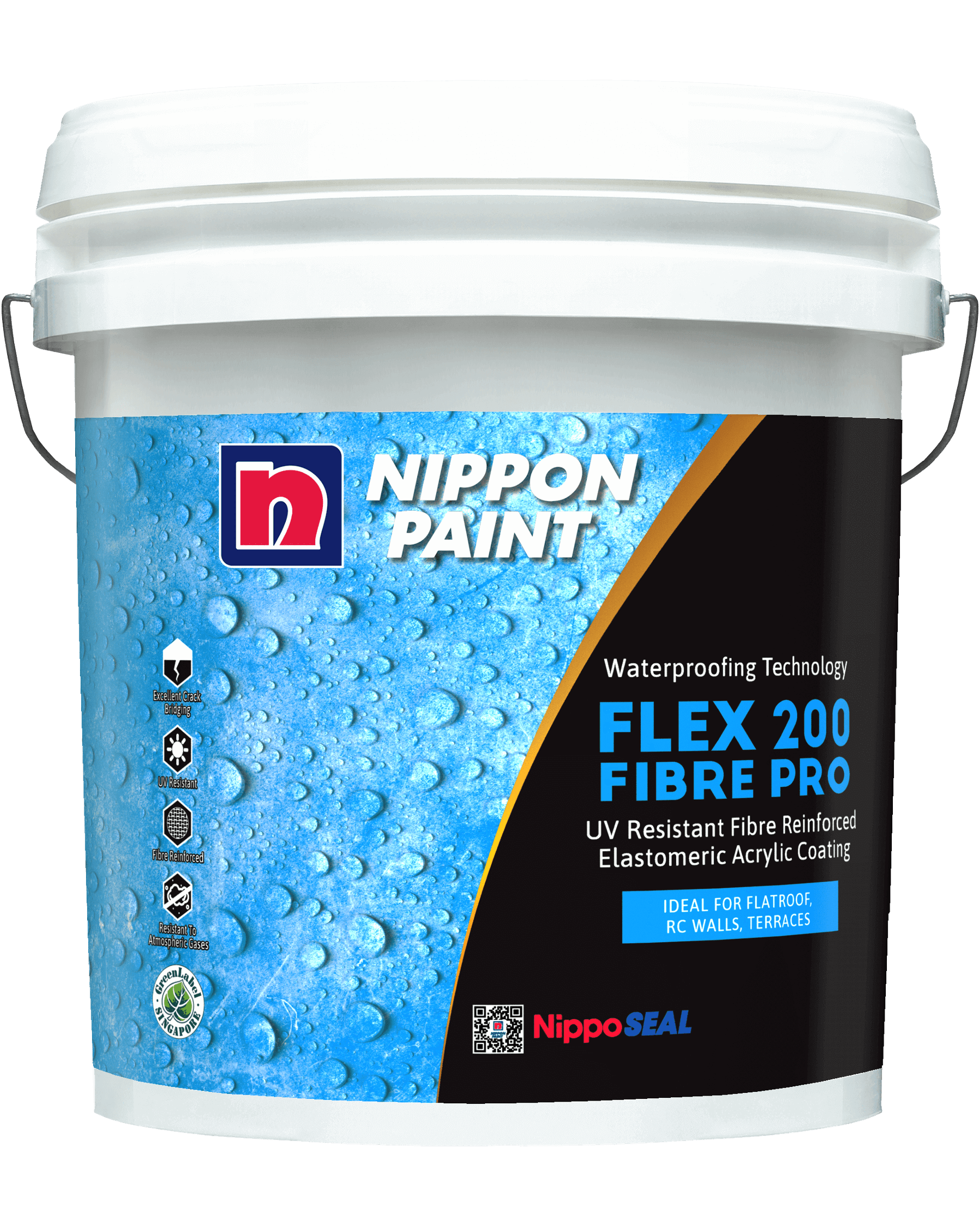
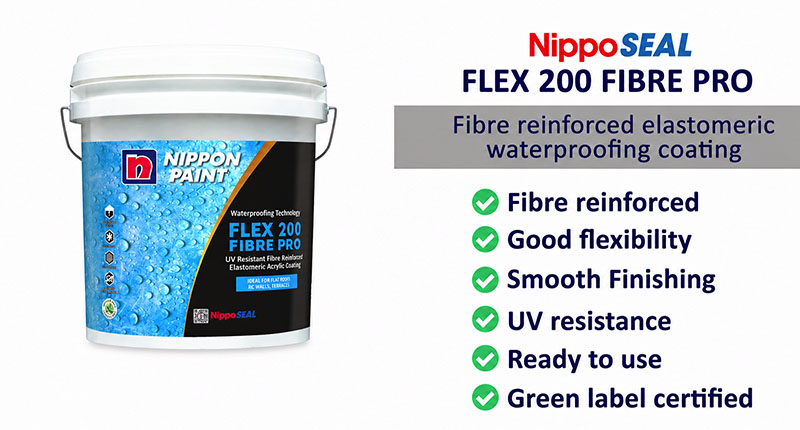
NIPPOSEAL FLEX 200 FIBRE PRO is a single-component water-based liquid-applied elastomeric waterproofing coating. It is specially formulated with acrylic copolymer integrated with micro-fibre reinforcement to form breathable, seamless, UV-durable waterproofing membrane It resists ageing against heat, UV, sunlight, rain and wind. Its micro-structure keeps water out but allows water vapour to escape through it. The incorporated micro-fibre composite leads to the formation of a higher dry film build which is able to accommodate better expansion and contraction stresses, and ultimately promote enhanced strength and a durable reinforced waterproofing membrane layer. Product Features: • Ready to use and easily applied • Flexible with stationary crack bridging capability • Barrier against salts and atmospheric gases • High build • Versatile and multi-purpose • UV stable with long service life and durable • Green Label certified Available in white and grey.
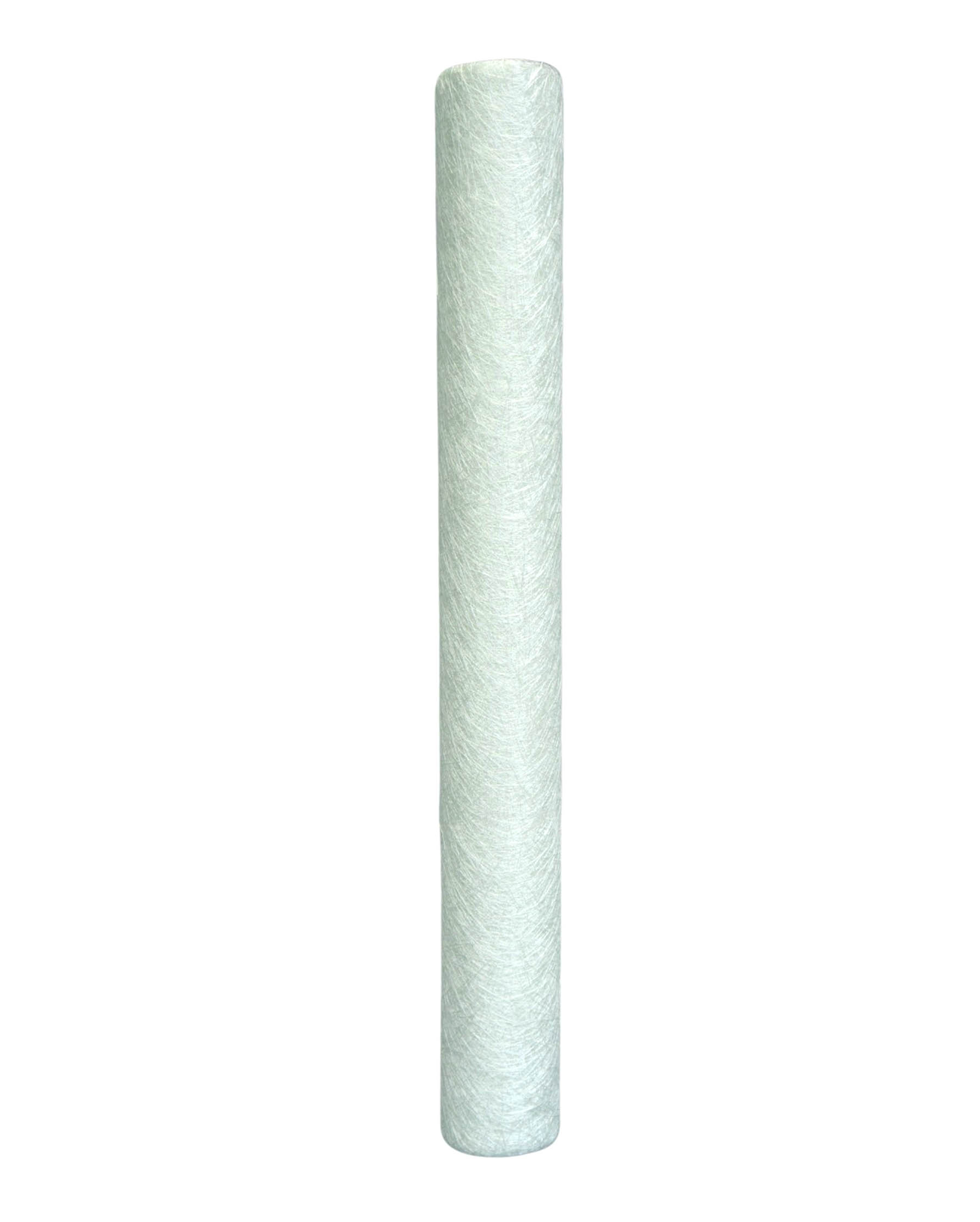
NIPPON PAINT LM MAT 225 is used as reinforcement with the liquid applied waterproofing membrane. The fibers is randomly oriented structure that provides maximum multi- directional tensile strength to the liquid applied waterproofing membranes while remaining high elasticity. Product Features: • Easy to apply • Superior acid resistance